 Image 1 of 2
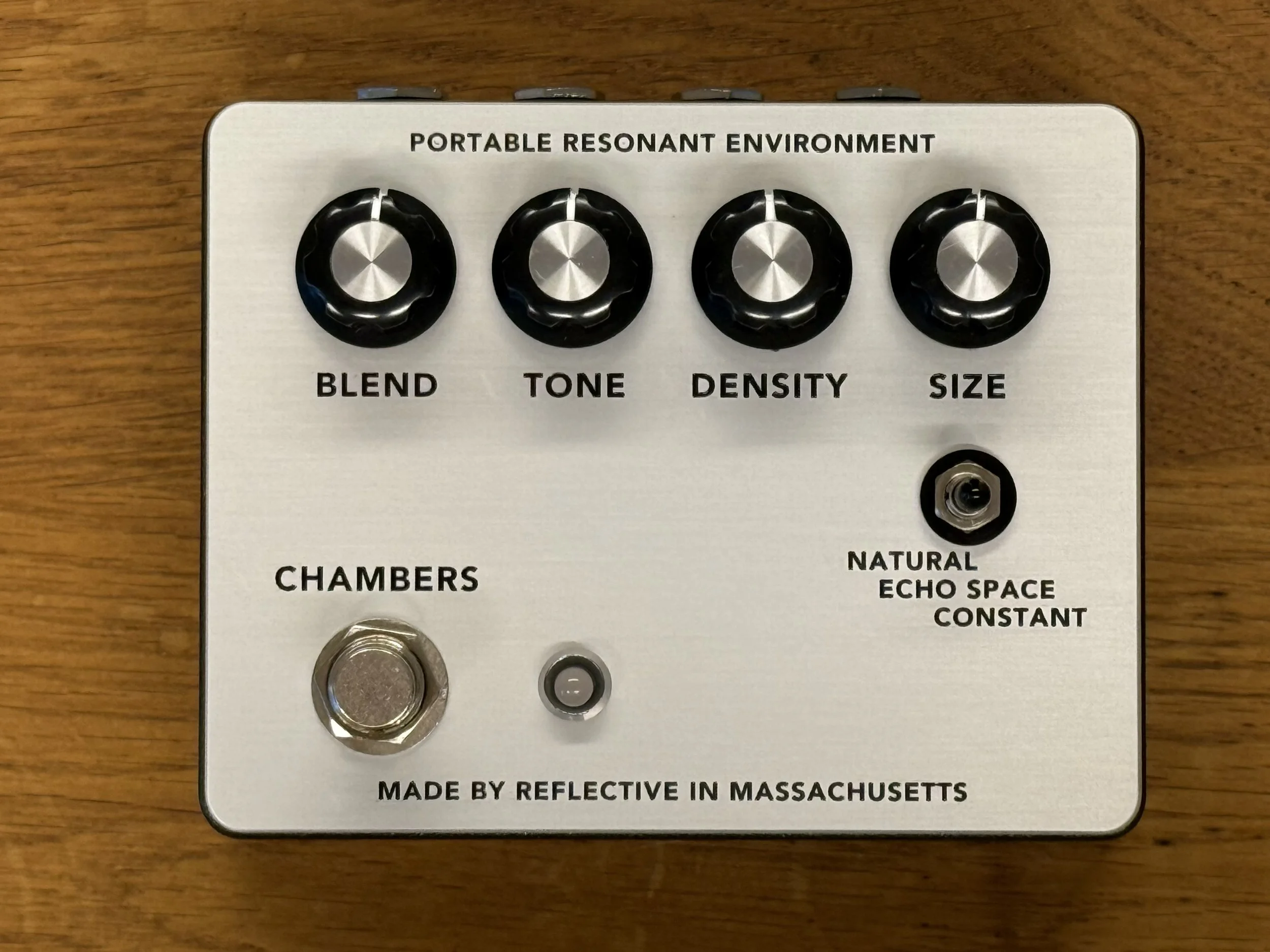 Image 2 of 2
Chambers C2 (Anodized)
Next batch coming soon
PORTABLE RESONANT ENVIRONMENT
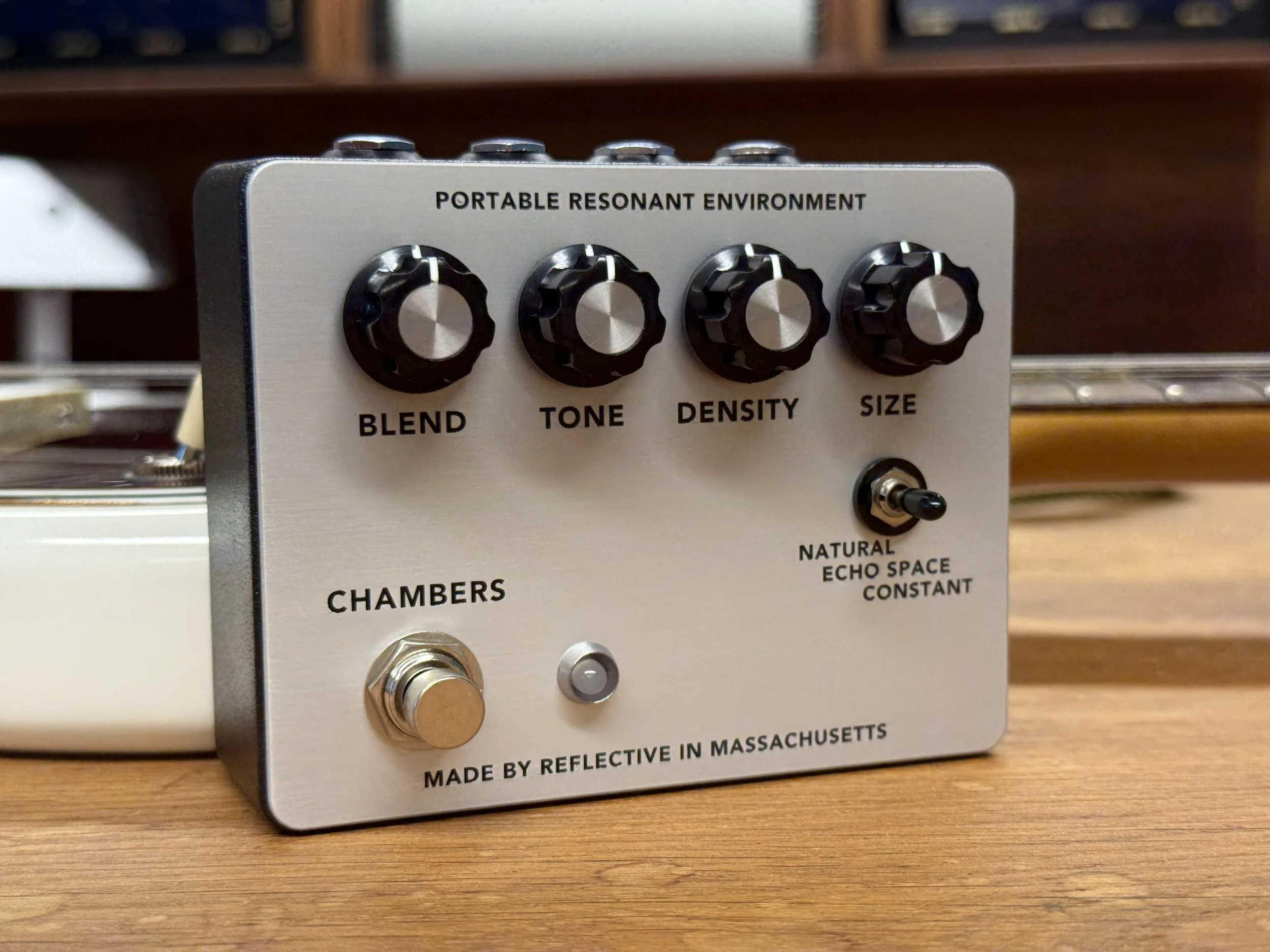
The C2 lets you explore spaces from small rooms to large halls, with infinite gradients of size and color between. Building on the foundation of the C1, it takes big leaps forward in transparency and naturalness while maintaining the same ease of use and control set from the original. The three spatial modes have been further refined by feedback from my own and others experiences performing with Chambers over the last year.
The NATURAL space models an enclosed acoustic volume that ranges from a small recording studio room to a very large concert hall. The SIZE control adjusts the spatial volume and the reverberation time proportionally. The C2’s smaller spaces are remarkably unobtrusive on guitar, and come alive on drums and percussive material. The small halls are ideal for solo instruments and vocals. The largest spaces take on a cathedral-like quality and can decay for up to 8 seconds.
The ECHO SPACE models an open, outdoor environment with a prominent reflection. Guitarists who favor a subtle slapback will find this mode useful in the way that it can make even busy or heavily distorted parts sound wet without cluttering the sound field and sacrificing clarity. The naturalistic diffusion completely eliminates the interference and harsh phase cancellation that stem from using short delays as slap backs.
The final CONSTANT mode extends the NATURAL mode into highly resonant, otherworldly spaces. The longest reverberation time is doubled, and the character evokes more resonant spaces with less absorption. Lower density settings in this mode can make strings and synths sound vast and expansive.
All three spaces can be tailored with the TONE and DENSITY controls. With TONE turned low, the low frequency resonance is increased and the bass energy will decay more slowly while some crispy high end is filtered out. Turned up, the low end will be rolled off, the sound becomes brighter, and the high end decays more slowly. The DENSITY control adjusts the quality of the reflections in the resonant space. Turning it down will thin out the sound and make the room sound more reflective. Higher DENSITY settings model well tuned, complex chambers with a lot of diffusion.
Three BLEND modes customize Chambers to your playing style. It can be configured for analog dry through, analog dry through with tails or a digital blend which can be set fully wet. Chambers is buffered-bypass, with the same high-headroom, whisper-quiet analog section as the C1, making it the ideal end of chain finisher for your board. Even better results can be had by using your favorite drive pedals in front of Chambers to optimize its signal level. But don’t worry; its LED turns red when you’ve gone too far. Chambers has stereo inputs and outputs, on separate jacks, and can be operated in mono, MISO or true stereo modes.
The first batch of C2’s ships with a vintage-styled (and incredibly durable) anodized aluminum faceplate with paint filled legends.
But what if I love the C1? How is the C2 different?
Thanks, I love it too!
Clearly all of the controls on the C2 are identical, but the sound is quite different. The room model is more three-dimensional and this is reflected in more naturalistic early reflections. The C2 also runs at twice the sample rate, and this produces an overall more hi-fi and transparent sound.
The ECHO SPACE and CONSTANT modes also have some different characteristics. In the C1, the ECHO SPACE mode has a clear echoing effect which has a digital delay quality to it. In the C2 this mode is much more realistic and has more of a single pronounced echo. The C1’s CONSTANT mode was influenced by early digital reverberators and could have very chattery reflections at low DENSITY settings. The C2 CONSTANT mode is much smoother and doesn’t have any of the primitive algorithm artifacts of the original.
Specifications
Size: 1590BBS landscape orientation
Switching: Electronic bypass, with or without tails
Input impedance: 1MΩ
Output impedance: 1kΩ
Connections: stereo input and output on separate jacks
Maximum input level: +18 dBu (dry) +9 dBu (wet)
DSP: 32 bit floating point processing at 96kHz
Power: 9VDC, 2.1mm center negative
Current draw: 250mA typical
I have fulfillment options for US, UK and Ireland only. Please use the contact form for orders outside of those regions. I’ll get back to you with shipping terms and an invoice for your order.